

If you’re looking at security screens or screen doors for your home, one of the most important things to understand is that not every screen that looks strong is actually classified as a security screen.
Diamond grille doors, stainless steel mesh screens and perforated aluminium screens can all look tough. But appearance and material alone don’t determine whether a product is a genuine security screen.
The critical difference is whether the complete screen system has been tested to the applicable Australian Standard, and installed in the configuration that tested system requires.
For homeowners across the Gold Coast and Sunshine Coast, including Caloundra, Aura, Baringa, Nirimba and Banya, understanding this distinction helps you decide where genuine security is worth paying for, and where a more economical barrier screen might do the job.
What is a genuine security screen?
A genuine security screen is specifically designed and tested to resist attempted forced entry. The National Security Screen Association (NSSA) is clear that a product can only be called a security screen if it passes the relevant Australian Standard testing and carries the appropriate compliance label.
The current framework, updated in 2023–24, covers three linked parts:
- AS 5039.1:2023 – sets the classification and performance requirements for security door and window screens.
- AS 5039.2:2024 – covers how security screens must be installed.
- AS 5039.3:2023 – sets out the test methods, including knife shear, jemmy (a prying tool), probe, corrosion, pull and impact tests, designed to replicate a real forced-entry attempt.
This is the key point: security is about the performance of the complete system, not just what the mesh is made from. Fit strong stainless steel mesh into a weak frame with the wrong fixings or hardware, and you still don’t have a compliant security screen. Equally, a perforated aluminium panel can be part of a fully compliant system when the whole product — mesh, frame, fixings and installation — has been designed, tested, manufactured and installed together.
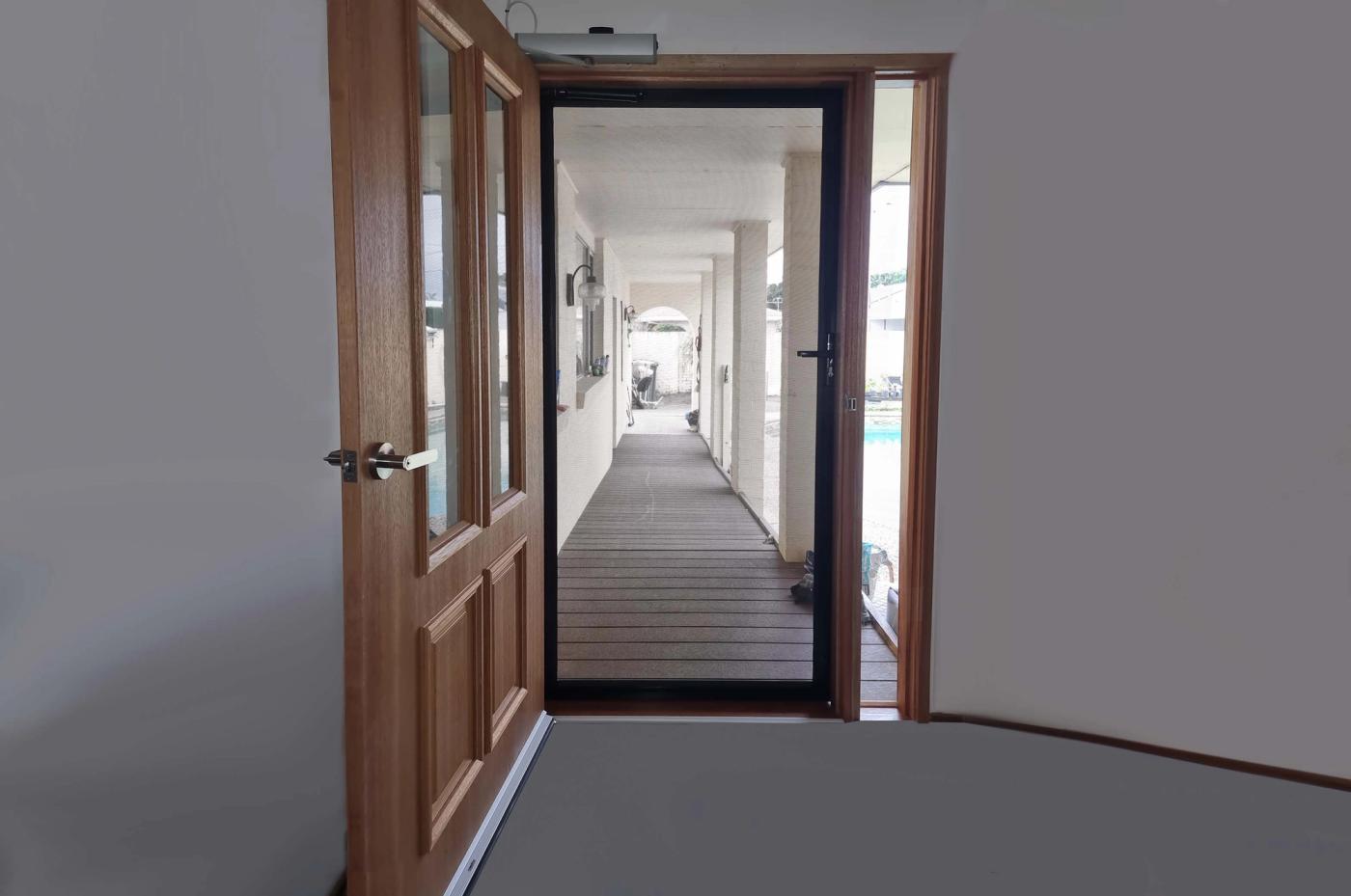
Security screen vs barrier screen: what’s the difference?
A security screen is a complete door or window system that has been tested and shown to meet the applicable Australian Standard. A barrier screen, sometimes called a safety screen, adds a physical layer at the opening but hasn’t necessarily been tested and certified as a complete security-screen system.
Our own barrier screens sit deliberately between the two. They use a heavier-duty aluminium mesh than a standard flyscreen, giving a real step up in strength at entry points, without the cost of a fully certified security door. They’re a genuinely useful option for keeping curious toddlers and pets from pushing through a doorway, and they meet many strata and body corporate requirements for doorway safety. What they aren’t is a substitute for a tested security door where forced-entry resistance is the priority.
The NSSA draws the same line: a barrier or safety door does not meet the same rigorous testing and performance standards as a security door, and lacks the strength and durability to provide the same reliable protection. That doesn’t make barrier screens pointless. It means knowing which one you’re buying, and choosing based on what each opening in your home actually needs.
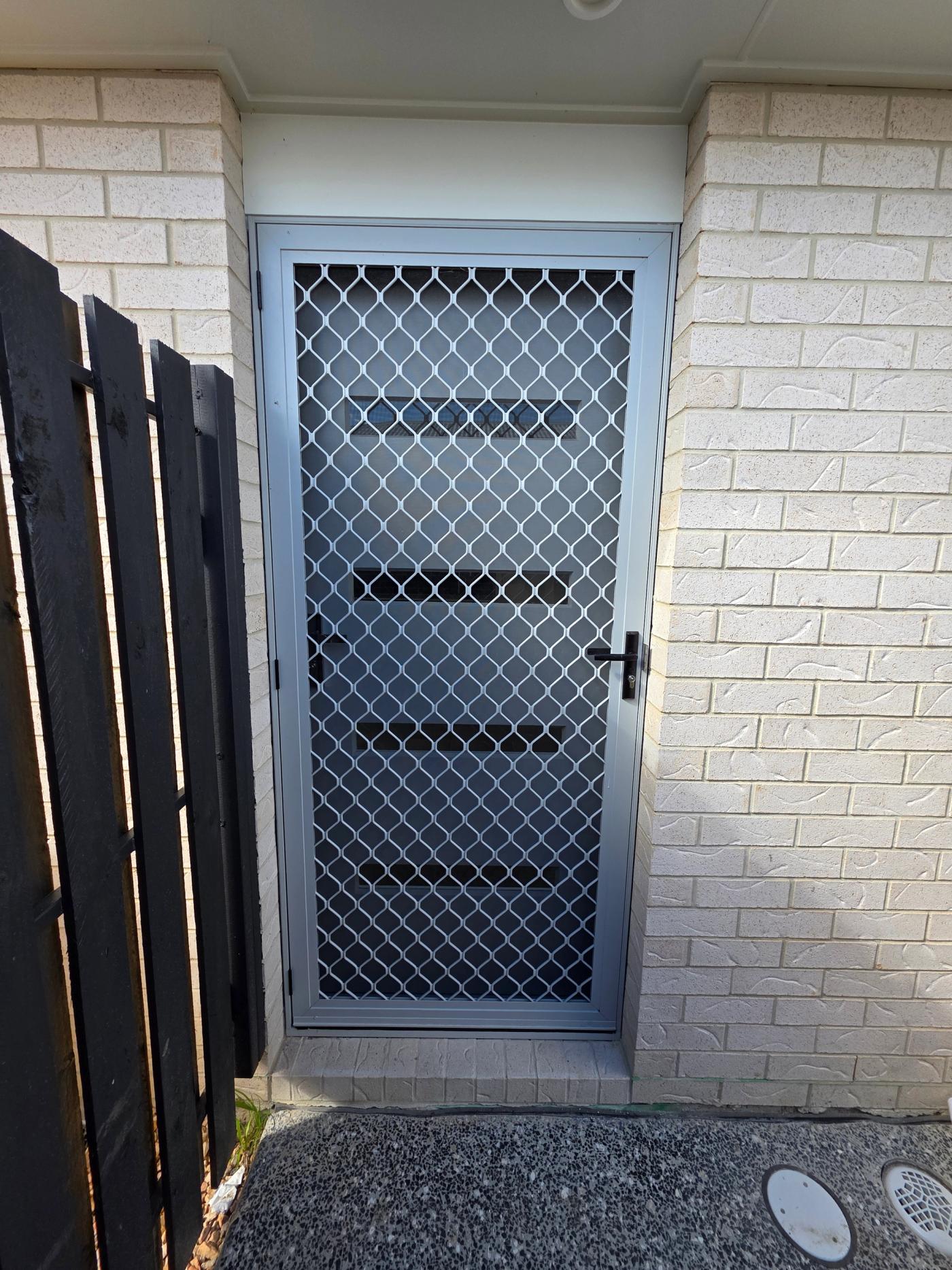
What about diamond grille screens?
This is where terminology gets confusing. Traditional diamond grille has been fitted to Australian homes for decades and is still a cost-effective way to put a physical barrier across a doorway or window.
Most conventional diamond grille shouldn’t automatically be called a security screen just because it’s aluminium. Prowler Proof makes exactly this point on its own site: most diamond grille products on the market aren’t security-rated, while its specifically engineered Welded Diamond and SnapLock Diamond systems have been tested and certified to the Australian Standard. Other manufacturers may offer certified diamond-look ranges too — the rule is the same regardless of brand: ask for the test certificate for that specific product.
That demonstrates the principle running through this whole article: it isn’t the appearance of the screen, or even what the infill is made from, that determines whether it’s a security screen. It’s the tested performance of the complete system. When you’re comparing diamond grille products, ask whether the specific door being quoted has been tested to be a compliant security screen or if its a barrier screen door.
The main types of security screen infill
There are a few different materials used in modern screen systems. Each has its advantages, and the right choice depends on your required security level, budget, appearance and how exposed the opening is to the weather.
316 marine-grade stainless steel mesh
316 stainless steel woven mesh is one of the most recognisable premium security-screen options. Fine stainless steel wire is woven into a high-strength mesh and retained within a purpose-designed aluminium frame. As NSSA members, we supply and install both Prowler Proof ForceField and CommandeX’s SecureView security screens — we carry both because each is independently NSSA-certified, and the right choice for your home comes down to fit, finish and budget, not which range we’d rather sell. Both use marine-grade 316 stainless steel mesh in aluminium frames, built for coastal Queensland conditions.
Each has its own strengths:
- Prowler Proof ForceField: welded corners, a full perimeter bond between the mesh and frame, Lockwood 3-point locking, and a 10-year full replacement manufacturer’s warranty.
- SecureView: a patented fixing system with no visible fasteners, integrated three-point locking, wood-look finish options, and an 11-year manufacturer’s warranty (15 years when registered).
Its main advantage over standard 304-grade stainless steel is corrosion resistance: the added molybdenum in 316-grade mesh resists chloride corrosion, salt spray and pitting far better, which matters for homes near the Gold Coast and Sunshine Coast waterline.
Don’t buy on “316 mesh” alone. The mesh is only one component. You should also weigh up how the mesh is retained in the frame, the frame and corner construction, the fasteners and installation method, corrosion isolation between dissimilar metals, the locking system, the hinges, and the compliance certification for that exact product.
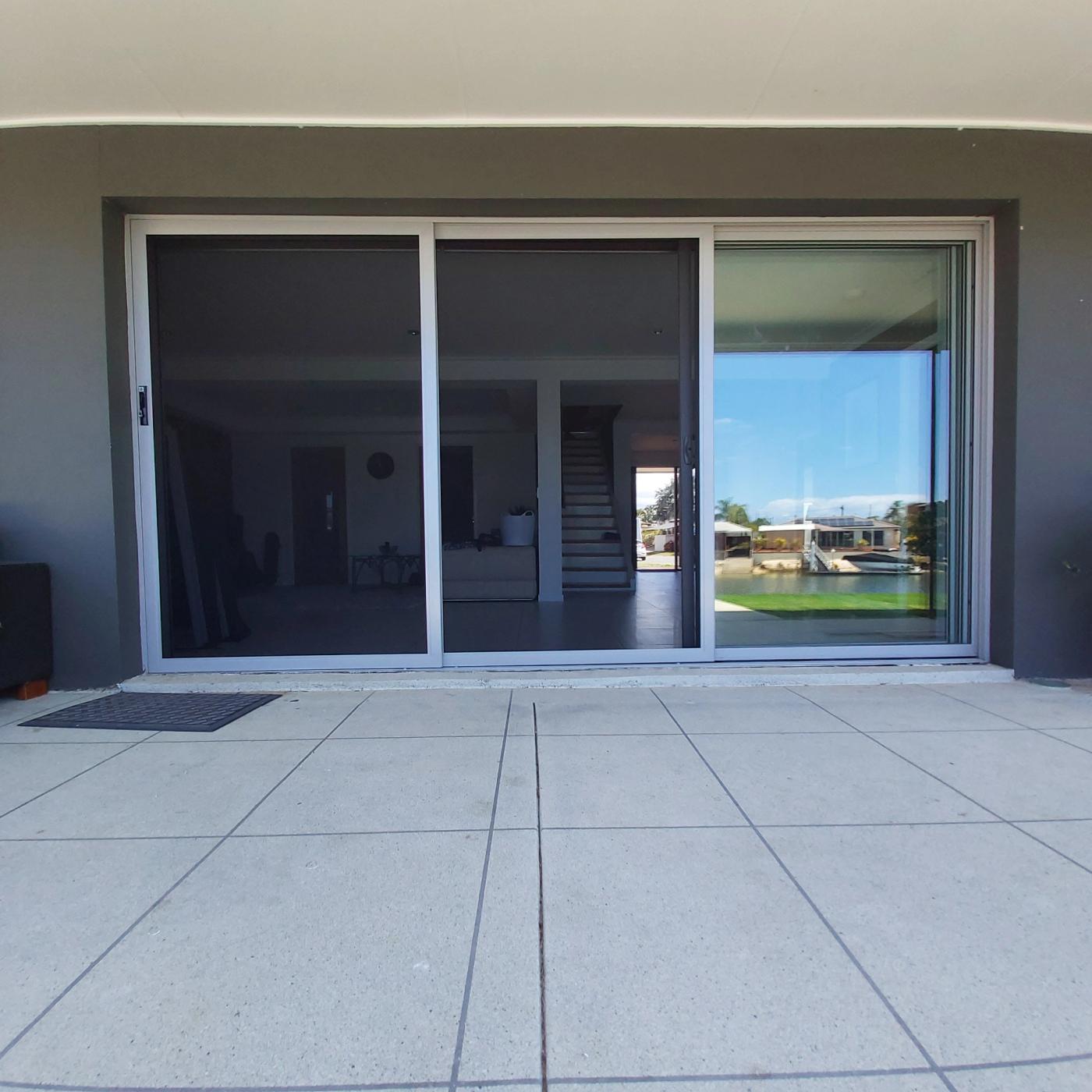
Perforated aluminium security screens
Perforated aluminium takes a different approach. Instead of woven stainless steel strands, the screen uses a single perforated aluminium sheet with thousands of small openings. Properly engineered perforated aluminium systems can also meet the Australian security-screen requirements, and several NSSA-accredited manufacturers, including Prowler Proof, offer tested perforated aluminium systems alongside their stainless steel mesh ranges.
It offers a strong physical barrier, good airflow and insect protection, generally more privacy than woven mesh, and a clean, contemporary look with no visible weave. Some homeowners prefer it as an alternative to premium stainless mesh, particularly where privacy or a more solid appearance matters. Either way, it’s the tested screen system, not the material alone, that makes it a security screen.
Diamond grille and aluminium mesh barrier screens
Diamond grille remains popular because it’s a practical physical barrier at a comparatively economical price. A typical barrier door combines an aluminium door frame, a diamond-pattern or heavier-duty aluminium mesh grille, insect mesh, hinges or rollers depending on the door type, and locking hardware. The grille stops someone simply pushing through the insect mesh and gives a much more substantial barrier than a standard flyscreen.
For newer builds and full-home packages, our barrier screens can also comprise of Basix barrier screens and doors which or the traditional diamond grille, which gives a cleaner look while still stepping up strength over a standard flyscreen. If your home already has a traditional diamond grille door, the upgrades below can improve what you’ve got.
Can you improve an existing diamond grille door?
Yes. Upgrading hardware won’t turn an untested barrier door into an AS 5039 compliant security door on its own, but there are practical ways to improve the resistance an existing diamond grille screen offers.
Upgrade 1: install a three-point lock
One of the biggest weaknesses of a basic barrier door is often a single-point lock, secured around the centre of the lock stile. That can leave the top and bottom of the door more vulnerable to being pulled or levered away from the jamb. A three-point lock engages the door at the top, middle and bottom, spreading locking resistance across far more of the door.
The NSSA treats a three-point lock as standard on a compliant security door, not an optional add-on, and specifically notes that it helps stop the top or bottom of the door being wrenched open. Key locks should be a 5-pin cylinder as a minimum. Adding a three-point lock to an otherwise non-compliant barrier door doesn’t automatically make the complete door AS 5039 compliant, though. Compliance is about the tested complete system.
Upgrade 2: add a snib guard
Diamond grille has larger openings than woven stainless steel or perforated aluminium mesh. Depending on where the lock sits, that can make the inside lock or snib easier to reach from outside than it would be behind fine security mesh. A snib guard is a simple physical shield around the internal locking area, making it much harder to reach through the grille and operate the snib.
On a conventional diamond grille door, combining the grille and insect mesh with a three-point lock and a well-fitted snib guard gives a noticeably more robust barrier than a basic door with a single-point lock and an exposed snib. It still shouldn’t be described as a compliant security screen unless that exact configuration has been tested and certified.
Upgrade 3: check the hinges
A strong lock isn’t much use if the opposite side of the door is the weak point. The NSSA recommends at least three fixed-pin hinges on a security door, ideally recessed or fitted with hinge fillings that prevent tampering or jimmying.
When you’re checking an existing barrier door, look at the number of hinges, whether any are loose, worn hinge pins, inadequate fasteners, movement between the hinge and the jamb, corrosion, and any deterioration in the surrounding frame. Security is a complete load path around the door, not just a lock upgrade.
Upgrade 4: check how the door is fixed to the building
This is one of the most overlooked parts of screen security. You can fit premium mesh and an excellent lock, but the screen is only ever as secure as the structure it’s attached to. Installation matters enough to have its own Australian Standard, AS 5039.2:2024, and the NSSA is blunt about it: don’t DIY.
A proper assessment should look at the existing door jamb, fastener type, fastener spacing and location, the substrate receiving the fixings, the lock-strike attachment, the hinge-side attachment, clearances around the screen, and the condition of the surrounding frame. This is exactly why buying on the advertised mesh material alone can be misleading.
Stainless mesh vs perforated aluminium vs diamond grille, at a glance
Every genuine security screen must pass the same AS 5039 testing regardless of infill, so the differences below are about feel, budget and environment rather than compliance.
- 316 stainless steel mesh: excellent visibility and airflow, a fine, contemporary look, and strong corrosion resistance for most coastal Sunshine Coast and Gold Coast homes when correctly specified and maintained.
- Perforated aluminium: a strong physical barrier with good airflow, generally more privacy than woven mesh, and no dissimilar-metal interface within the infill itself.
- Standard diamond grille barrier: the most economical physical barrier, but not necessarily security-rated. Certified diamond-look ranges do exist — such as Prowler Proof’s Welded Diamond and SnapLock Diamond systems — but always confirm the specific product has been tested to AS 5039 before assuming it qualifies.
What should you look for when buying a security screen?
Don’t ask only “is this stainless steel?” Ask “is this exact screen system tested to the current Australian Standard?” Then look deeper. The NSSA recommends checking the infill, frame, corner construction, hinges, locking system and compliance labelling, rather than judging a product on appearance alone. Here’s what to ask your supplier.
- Does the product comply with AS 5039? Ask about the exact product you’re buying, not the manufacturer’s range in general.
- Will it carry the right compliance labels? NSSA members must label every security screen product that meets AS 5039, covering both manufacturing and installation compliance. If it isn’t labelled, it isn’t a security door.
- Is it fitted with a three-point lock? For a security door, don’t treat this as a luxury upgrade. The NSSA describes a three-point lock as standard on a compliant security door, with a 5-pin cylinder key lock as a minimum.
- What is the infill made from? Understand whether you’re buying 316 stainless steel woven mesh, perforated aluminium, an aluminium grille, or simply an untested barrier product.
- How is the frame built? Look for a deep, sturdy receiver channel and corners that are reinforced or fully welded, so the infill can’t be pushed out or pried loose.
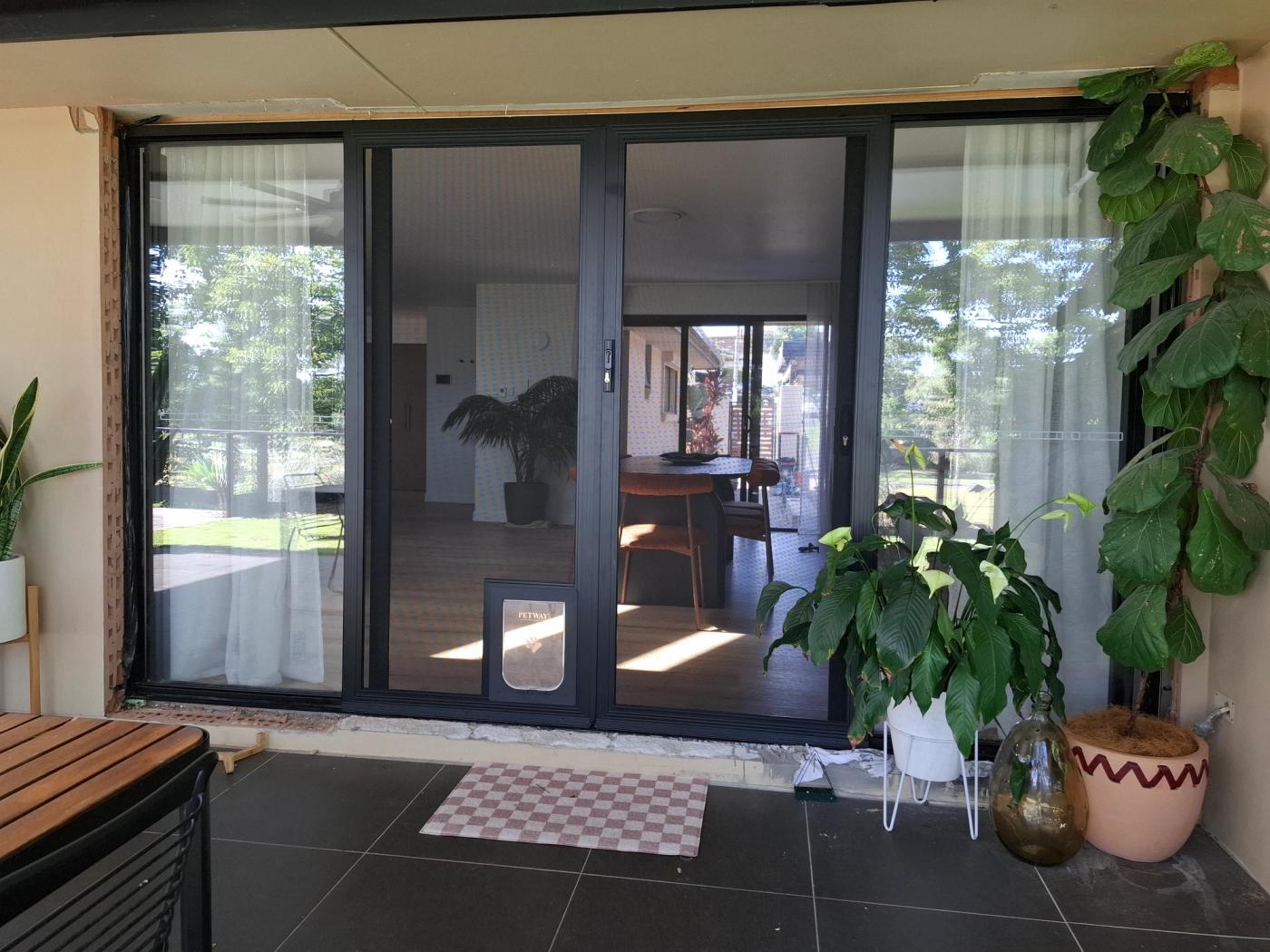
- Has a pet door been cut into it? Once a pet door is added to a security screen, the opening compromises its compliance, even if the rest of the door was originally certified.
What are the main benefits of security screens?
A genuine, AS 5039-compliant security screen earns its place on a Gold Coast or Sunshine Coast home well beyond the peace of mind it brings against intruders. Here’s what you actually get for your investment.
Physical protection
This is the core benefit: a genuine security screen is designed and tested to resist forced entry, using knife shear, jemmy, probe and impact tests set out in AS 5039.3. That’s a materially different level of protection to a flyscreen or an untested barrier door.
Airflow, light and visibility
Unlike a solid security shutter or grille, a mesh security screen still lets air move through the opening and lets you see out clearly, which matters in Queensland’s climate. 316 stainless steel mesh in particular is prized for its fine weave, which keeps sightlines open while still meeting the AS 5039 forced-entry requirements.
Insect protection
A fine security mesh doubles as an insect screen, so you get the airflow and bug-free living of a flyscreen with the added benefit of forced-entry resistance behind it. That’s one less separate product to buy, clean and maintain on every door and window.
Street appeal
A well-made security door is also a feature in its own right. Prowler Proof ForceField and SecureView both come in a range of frame colours and finishes, including timber-look options, so your security upgrade can complement your home’s facade rather than looking like an afterthought bolted onto the front door.
Corrosion resistance for coastal conditions
Salt air is one of the biggest threats to any metal screen on the Gold Coast or Sunshine Coast, which is why material choice matters here as much as the lock and frame. Marine-grade 316 stainless steel is the benchmark for coastal durability — its molybdenum content resists pitting, tea-staining and chloride corrosion far better than standard 304 stainless steel, which is why it’s used in both Prowler Proof ForceField and SecureView.
Corrosion isn’t only about the mesh, though. Wherever two different metals meet — stainless steel mesh in an aluminium frame, for example — there’s a risk of galvanic corrosion if they aren’t properly isolated. A well-installed, compliant security screen accounts for this with isolation strips, gaskets or coatings that keep dissimilar metals from reacting. It’s another reason the complete tested system matters more than any single component: excellent mesh in a poorly isolated frame can still corrode prematurely.
For homes on the Sunshine Coast — including much of Aura, Baringa, Banya, Nirimba and Caloundra — it’s worth raising this with your installer up front, and keeping up a simple rinse-down routine to clear salt residue from mesh and frames and get the full lifespan out of your investment.
Choosing the right screen for your home
Not every opening needs the most expensive product available. A barrier screen can be the sensible choice where the priority is insect protection, keeping pets and toddlers in, or a step up from a flyscreen on a tighter budget. A genuine, tested security screen earns its cost where an opening is easily accessed from outside, doors are regularly left open for airflow, or forced-entry resistance is the main goal — including ground-floor windows and doors that see regular use. Many homes end up with a mix of both across different openings, rather than the same product everywhere.
Getting this right starts with asking the right questions rather than comparing on price or looks alone. If you’d like an honest assessment of which option suits a particular door or window in your home, our team can talk you through the trade-offs and provide a free measure and quote across the Gold Coast and Sunshine Coast.


